The Ultimate Guide to Electronic Design Process
Table Of Content
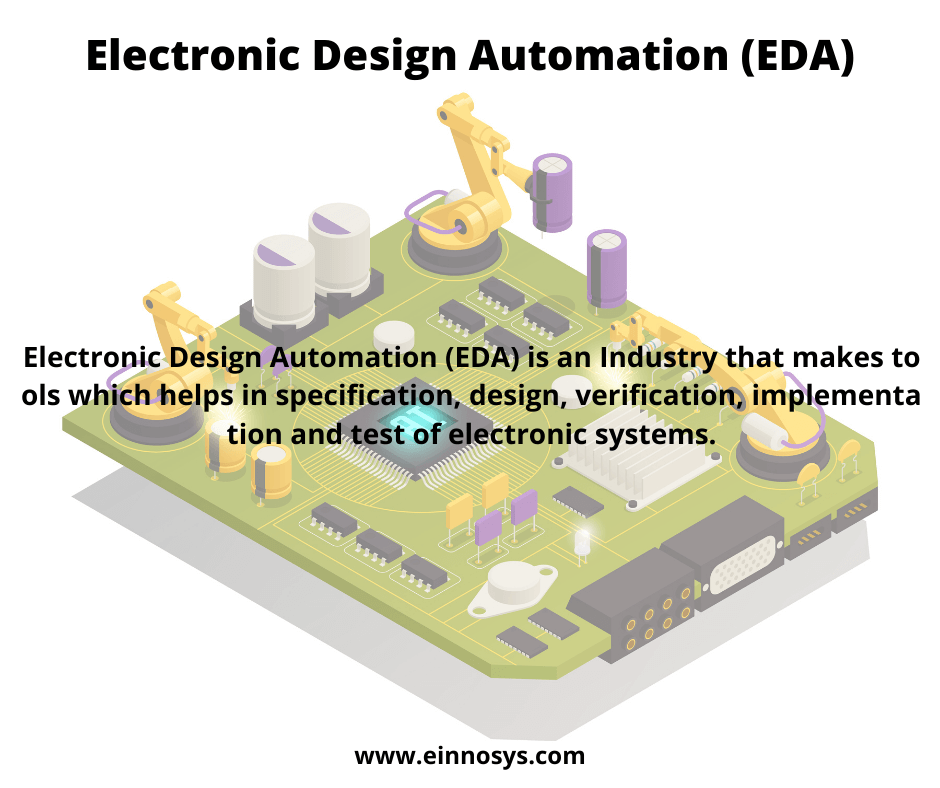
There are numerous applications for machine learning (ML) that are transforming various industries, one of which is electronic engineering. With ML technology, there are now software tools you can use to design and run simulations for your circuits. The circuit design process starts with outlining the idea for the problem you want to attempt to solve with an electronic circuit. Electronic devices are named as such because they are designed with semiconductors that allow for the flow of electric charges. There are many different kinds of semiconductor devices, but the two main types are diodes and transistors, such as light-emitting diodes (LEDs) and field-effect transistors (FETs).
Our projects
For many years, the larger electronic companies, such as Hewlett-Packard, Tektronix and Intel, had pursued EDA internally, with managers and developers beginning to spin out of these companies to concentrate on EDA as a business. Daisy Systems, Mentor Graphics and Valid Logic Systems were all founded around this time and collectively referred to as DMV. Department of Defense additionally began funding of VHDL as a hardware description language.
“SUPER” GPUs Debut at CES 2024 - Electronic Design
“SUPER” GPUs Debut at CES 2024.
Posted: Mon, 08 Jan 2024 08:00:00 GMT [source]
The Ultimate Guide to Electronic Design Process
Along with the high-frequency signals from WiFi and Bluetooth antennas, devices may also include transducers that emit low-frequency electromagnetic signals, all contributing to potential interference issues. The performance of the antenna is also influenced by the adjacent components on the PCB. This is the stage where you must collect all the documents and information that you possibly can which will enable manufacturing companies, third party or in house, to recreate your design and test it. Therefore, it’s recommended to go through a design review process – let other engineers review your work and provide feedback and suggestions. The careful use of these technologies will be crucial in shaping a future where consumer and industrial electronics increasingly efficiently meet the evolving needs of society and industry. Industrial electronics will continue to transform radically with the implementation of Internet of Things (IoT) solutions for more efficient resource management and optimization of manufacturing processes.
User account menu
Once you have your circuit idea, you’ll want to draw it out or illustrate it by creating a schematic. This will give you an overall picture of your design so you can get a better visual of where components will need to be connected to ensure your circuit will function as intended. 6.002 is designed to serve as a first course in an undergraduate electrical engineering (EE), or electrical engineering and computer science (EECS) curriculum. At MIT, 6.002 is in the core of department subjects required for all undergraduates in EECS.
Fundamentals of Communications Access Technologies: FDMA, TDMA, CDMA, OFDMA, AND SDMA
By optimizing for multiple objectives, AI-driven tools can yield design solutions that balance conflicting requirements, such as minimizing weight while maximizing structural integrity. Research published in the “Journal of Machine Learning in Engineering” highlights cases where AI-generated designs outperformed traditional solutions by 10-15% in efficiency metrics, underscoring the potential for innovative breakthroughs. Using Altair’s electromagnetic simulation technology, device designers can prioritize these key attributes and design, simulate, and optimize the performance of sensor electronics or actuators.
By integrating more of the magnetic and passive components in the system, Empower said IVRs can also be placed much closer to the load. The ideal location is directly under the SoC, as it shortens the power-delivery path as much as possible. That helps reduce impedance in the PDN, resulting in more power getting to the processor. “That speed ultimately allows the load to be more efficient,” said Krishna, Empower’s senior manager of product marketing. Higher frequencies also reduce the inductors and magnetics that must be placed in front of the load, allowing integration or elimination of these large, tall components.
Simulation
5G networks and machine-to-machine (M2M) communication will make industrial plants more interconnected and responsive. The robustness and speed of telecommunications networks determine the effectiveness with which electronic products can interact and exchange data. Furthermore, advancements in telecommunications allow app developers and device manufacturers to offer superior performance and new features, increasing the utility and efficiency of products. Though not there yet, Empower said it’s working its way up to powering large AI chips and other high-performance (HPC) chips that push the limits of conventional power electronics and cooling. The EP71xx chips can be paired with everything from CPUs, GPUs, and SoCs to the DSPs inside pluggable connectors and active copper cables in data centers to a wide range of other networking, memory, storage, and wireless systems.
Discourse surrounding AI in electronics also necessitates a discussion on ethical considerations and the imperative for responsible AI usage. The adoption of AI solutions must be guided by principles of transparency, fairness, and accountability to prevent biases and ensure trustworthiness in AI-powered decisions. The IEEE’s guidelines on Ethically Aligned Design offer a framework for addressing these concerns, emphasizing the importance of ethical standards in the development and deployment of AI technologies. According to a report by ResearchAndMarkets.com, the global AI in electronics market is expected to grow at a CAGR of 22.4% from 2020 to 2027, reaching a total market size of $10.4 billion by 2027.
Translate onto a schematic
These developments have led to the creation of cutting-edge electronic products, with applications for smartphones or tablets that significantly enhance the user's interaction with the electronic ecosystem. High-performance AI chips are already driving up power-per-rack specifications in the data center by 3X or more. And as systems engineers start to reevaluate how they deliver power to these huge chips, Empower could find itself in the right place at the right time with its IVR technology. Empower’s latest family of power ICs, the EP71xx, integrates up to four voltage regulators in a compact 5- x 7- x 0.7-mm package that outputs a total current of 12 A. The multi-phase DC-DC converters run on a 3.3-V input with up to four independent outputs that can each supply part of the full current, delivering up to 27 W.
Altair offers electronic circuit simulation tools in an open integration platform for modeling, simulating, and optimizing multi-disciplinary systems-of-systems. The simulation is based on SPICE syntax and component equations, which allow co-simulation of system level models with SPICE accurate electronic circuit descriptions and ensures the circuit is functional before fabrication. For analyst-level users investigating challenging electronics cooling and design applications, Altair offers board and system-level thermal analysis solutions that are accessible directly within its multiphysics environment.
The IVR can be placed in a package to handle the very last step of the power delivery, reducing parasitics and package ball count. All of these components require real estate on the PCB, limiting how close the voltage regulator can be placed to the processor. As current travels a longer lateral distance between the DC-DC converter and the load, it encounters more resistance on the power rails, increasing impedance in the PDN. In general, higher currents require more phases and every phase adds more magnetics and passives to the system.
Equally important is ensuring that the data and analysis developed within each pillar can be readily shared across disciplines to drive a more effective holistic design. The ever-increasing pace of innovation in the electronics industry has pushed manufacturers to explore modern approaches to electronic system design to gain a competitive edge. The basic principles of electronics include an understanding of electric current, voltage and resistance. They are based on fundamental laws, such as Ohm's law, which states that current in a circuit is directly proportional to voltage and inversely proportional to resistance. Other principles include the concept of electrical power and circuit analysis techniques, such as the method of nodes and meshes, which are essential for composing and interpreting electronic circuits.
To develop complex embedded systems like sensor and actuator controls, vision systems, and IoT devices, design engineers need software for model-based firmware development. Hardware-in-the-loop testing is fully supported using a high-speed bidirectional communication link for data collection and real-time tuning. PollEx is an agile toolset that enables collaboration across component, subsystem, and system-level design, as well as across logical and physical design spaces. It offers solutions for PCB design review, verification, analysis, and even rule-based design for manufacturing, design for assembly, and design for electrical.
These process technologies have inherently stringent limits on core operating voltages to limit the power consumed by the FinFET transistors within. While a power supply distributes power inside data centers, on factory floors, or other electronic and embedded systems, the voltage regulator is the final stage it encounters before entering the load itself. Schematic design, PCB layout, and fabrication – we offer a complete set of services for implementing printed circuit boards. Iterate.ai is a Silicon Valley-based software firm that develops artificial intelligence-powered low-code software designed to accelerate innovation projects within large enterprises. One of the biggest concerns is the potential loss of jobs for human engineers and designers.
The power savings unlocked by more rapidly scaling the voltage can amount to more than 10% depending on the situation. As it features up to 100X higher frequency operation than other technologies, the IVR gives you the ability to tighten the voltage margining budget of the processor, resulting in power savings of 10% to 20%, according to the company. However, lots of obstacles stand in the way of delivering clean, stable power to the load. To prevent noise and ripple from interfering with the power integrity (PI) of the PDN, it’s standard practice to run at a higher voltage, which unfortunately wastes power. While AI chips in the data center are becoming progressively more power-hungry, they’re not alone.
The power demands of CPUs, GPUs, FPGAs, SoCs, and everything in between also continue to rise. In-browser simulation and plotting lets you design and analyze faster, making sure your circuit works before ever picking up a soldering iron. All rights are reserved, including those for text and data mining, AI training, and similar technologies. We make the final evaluation of the project, make up a team, and schedule its workload. When this step is completed successfully, the PCB layout program will generate all the necessary files for the next steps – PCB production and PCB assembly. After you are done designing your PCB as well, the software will run a design rule check to determine if there are any discrepancies or errors in the layout and the various specifications regarding the connections and placement of components.


Comments
Post a Comment